
References [ 1 ]
Gachon CMM, Strittmatter M, Badis Y, Fletcher KI, Van West P & Müller D (2017) Pathogens of brown algae: culture studies of Anisolpidium ectocarpii and A. rosenvingei reveal that the Anisolpidiales are uniflagellated oomycetes. European Journal of Phycology 52: 133-148.
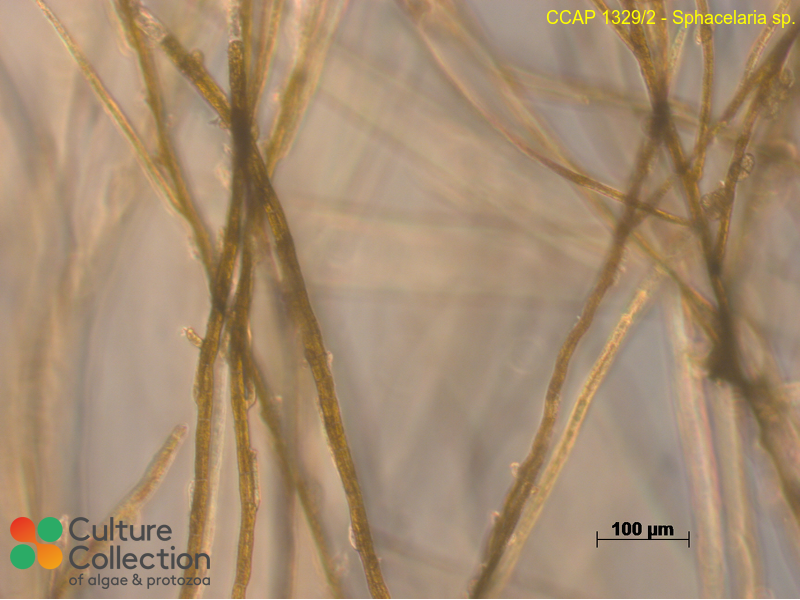
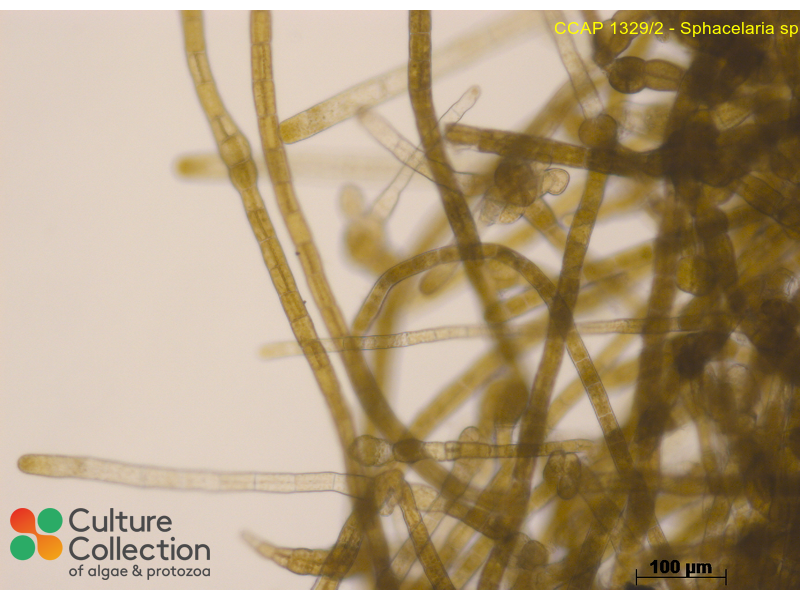
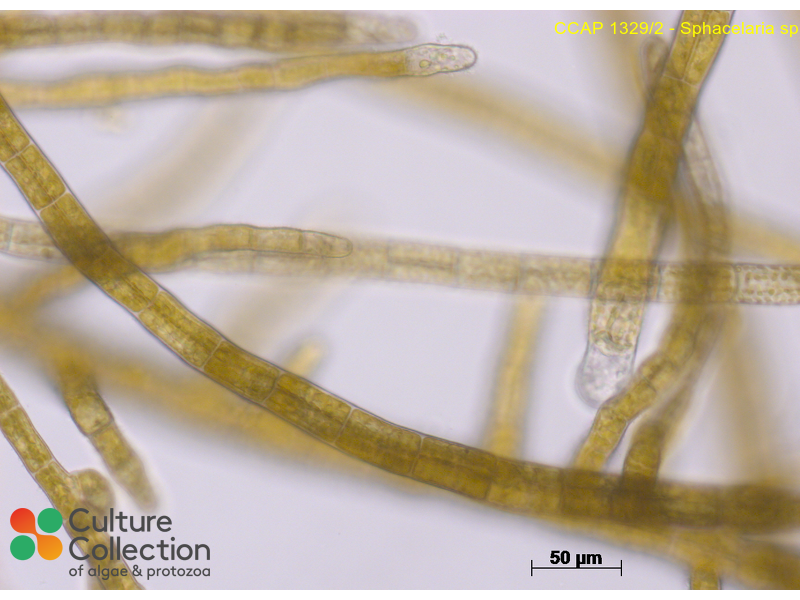
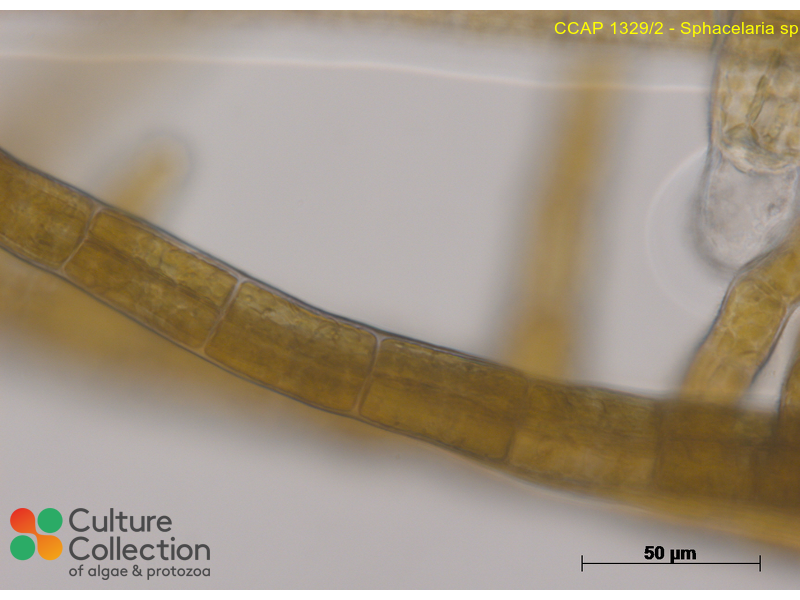
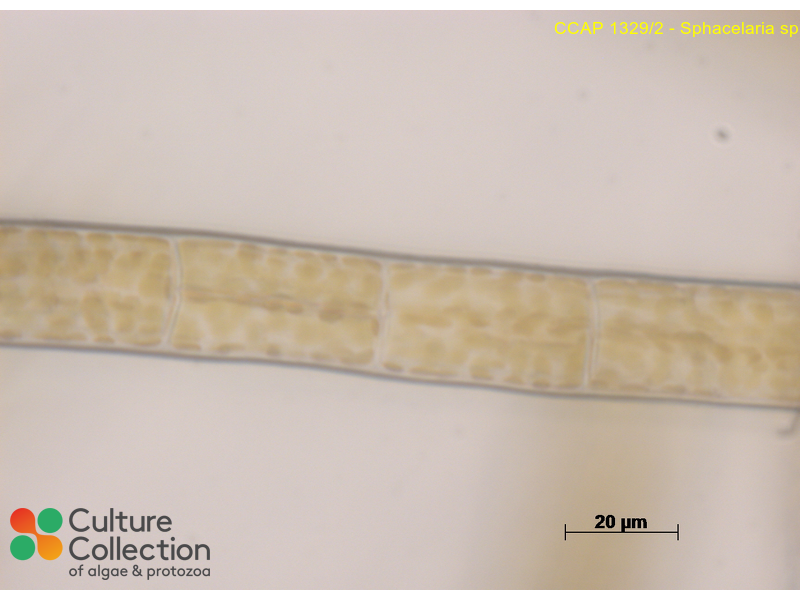
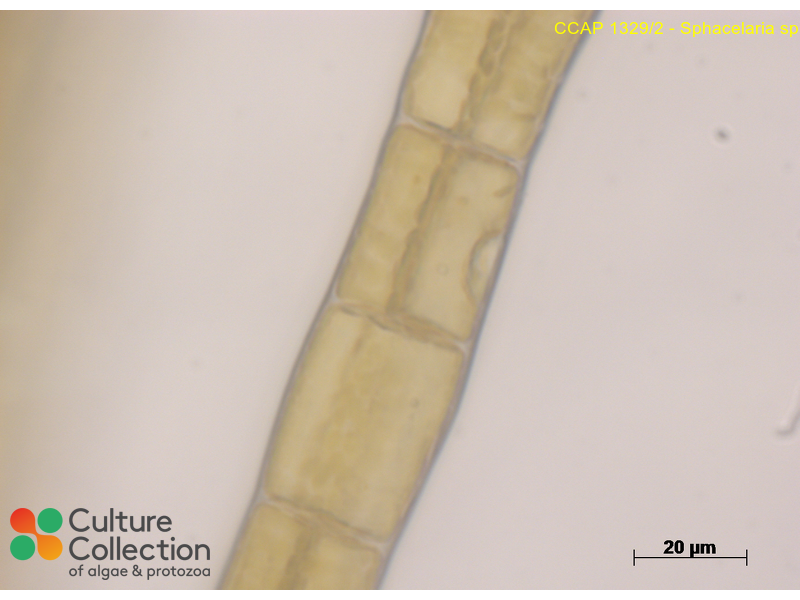
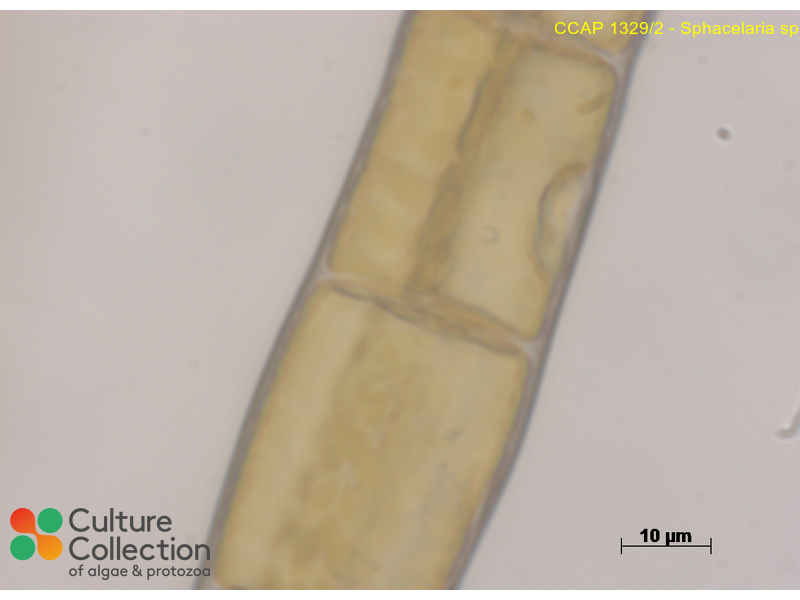
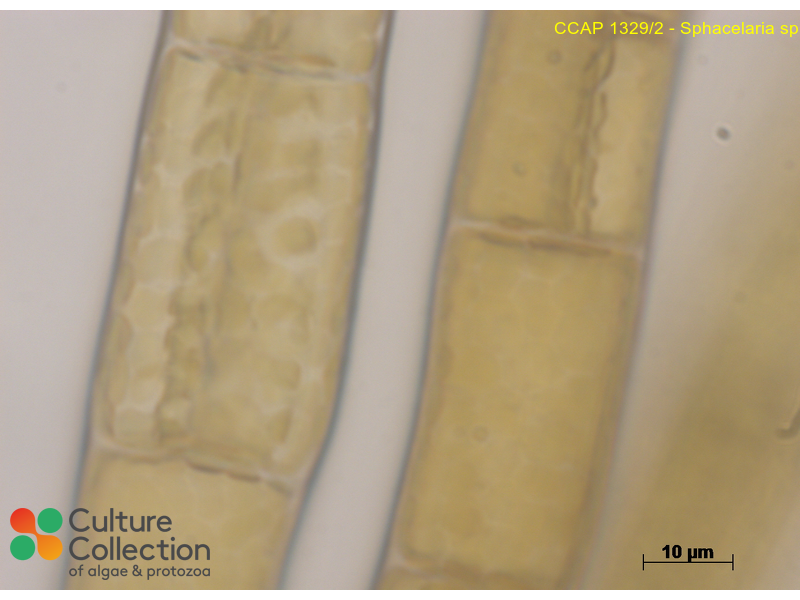
Division/Phylum: Heterokontophyta Class: Phaeophyceae Order: Sphacelariales
Note: for strains where we have DNA barcodes we can be reasonably confident of identity, however for those not yet sequenced we rely on morphology
and the original identification, usually made by the depositor. Although CCAP makes every effort to ensure the correct taxonomic identity of strains, we cannot guarantee
that a strain is correctly identified at the species, genus or class levels. On this basis users are responsible for confirming the identity of the strain(s) they receive
from us on arrival before starting experiments.
For strain taxonomy we generally use AlgaeBase for algae and
Adl et al. (2019) for protists.
Culture media, purity and growth conditions:
Medium:
Modified Provasoli;
Bacteria and other organisms present; maintained by serial subculture; 8 deg C; daylight type fluorescence ca 1000 Lux
| Attributes | |
| Isolator | Cavassilas (1964) |
| Collection Site | epiphyte on Levringia brasiliensis Rabat, Morocco |
| Notes | Isolation: apical fragment regenerated to unialgal clonal culture; This macroalgal culture contains bacteria and probably other organisms in low numbers, we are happy to provide further info on specific strains if you contact us |
| Axenicity Status | Bacteria and other organisms present |
| Area | Africa |
| Country | Morocco |
| Environment | Marine |
| GMO | No |
| Group | Macroalgae |
| In Scope of Nagoya Protocol | No |
| ABS Note | Collected pre Nagoya Protocol. No known Nagoya Protocol restrictions for this strain. |
| Collection Date | c 1964 |
| Original Designation | Sph RM |
| Pathogen | Not pathogenic: Hazard Class 1 |
| Strain Maintenance Sheet | SM_MarineBrownSeaweeds.pdf |
| Toxin Producer | Not Toxic / No Data |
| Type Culture | No |
| Taxonomy WoRMS ID | 144272 |